Every developer I know uses AI for the same thing: code. Autocomplete, debugging, refactoring, explaining regex. That's fine, but it's like buying a kitchen and only ever using the microwave.
At some point I stopped thinking of AI as a dev tool and started treating it like a quiet utility that already knows my context. No chat window, no typing prompts from scratch every time. Just small automations wired into moments that were already happening. Here's what stuck.
Weather, but actually useful
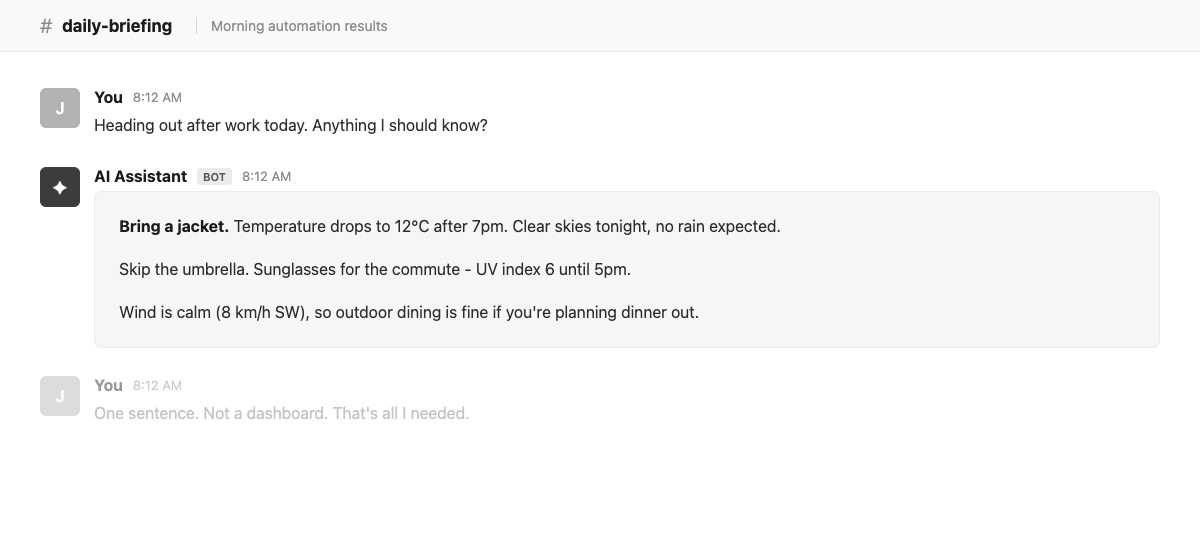
I don't need a weather app. I need someone to tell me "bring a jacket, it'll drop to 12 degrees after 7pm" when I'm about to leave. That's a different problem than showing me a 10-day forecast with humidity percentages.
I set up a shortcut that pulls the weather API once in the morning and hands the result to AI with one instruction: tell me what to actually do about it. Bring an umbrella. Skip the jacket. Sunscreen if you're eating outside. It takes less than a second to run and the output is one sentence, not a dashboard.
The weather app is still on my phone. I just never open it anymore.
Stretching routines I'll actually follow
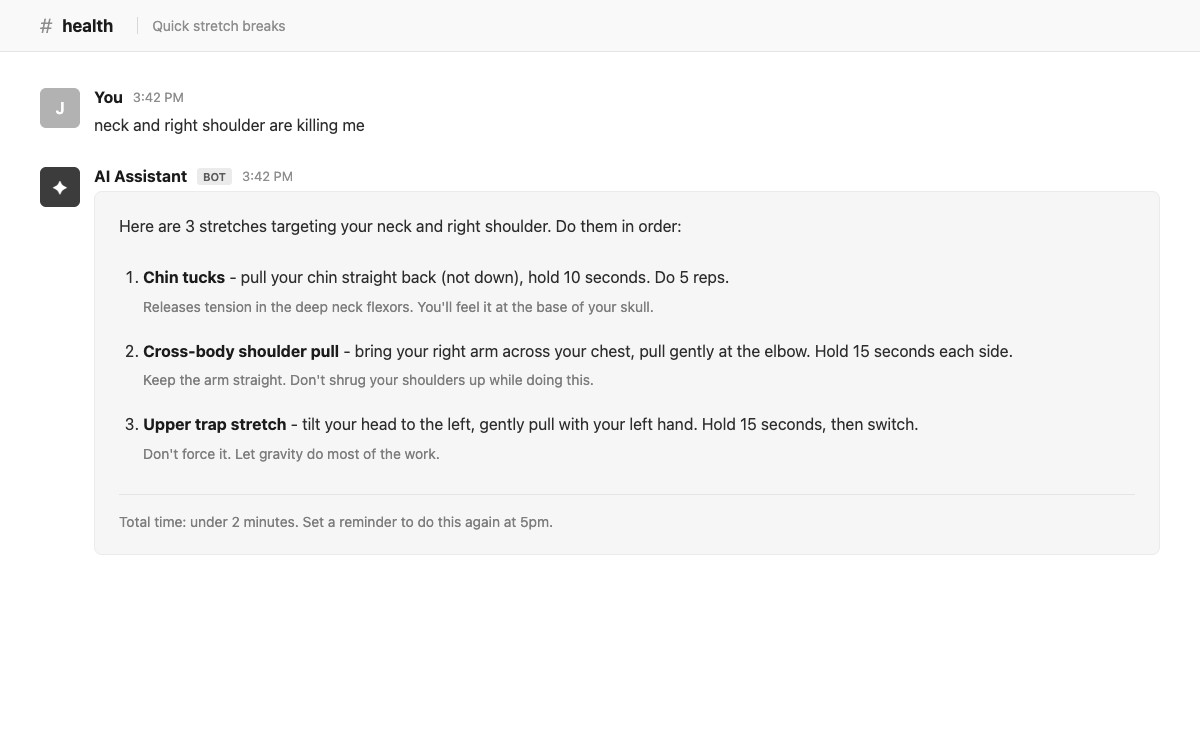
I sit at a desk for 10 hours a day. I know I should stretch. Every guide online gives me a 20-minute routine with names I can't pronounce, and I do it once and forget.
So I ask AI to give me three stretches, under two minutes total, based on what hurts today. "Neck and right shoulder" gets me three moves. "Lower back after sitting all day" gets me three different ones. No app, no subscription, no 15-minute YouTube warmup before the actual content starts.
The trick was keeping it short enough that I'd actually do it. A full routine is a commitment. Three stretches is just standing up for a minute.
Research without the SEO spam
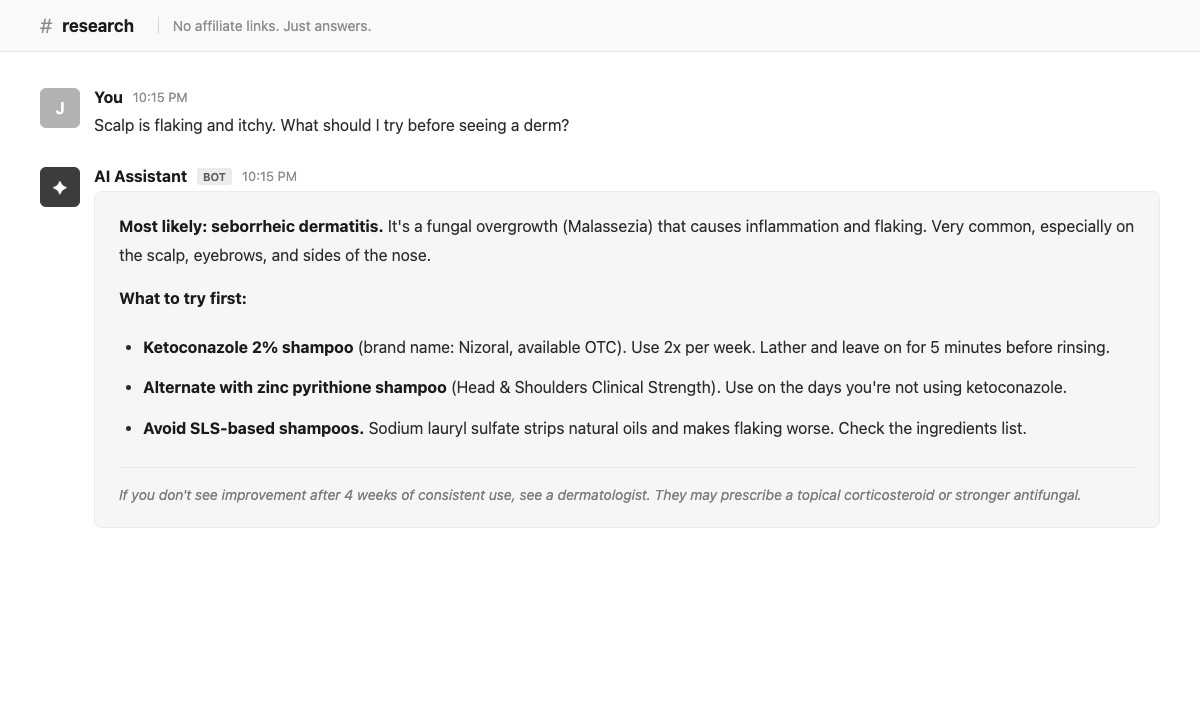
Try searching for scalp care advice online. You'll get 40 affiliate blogs ranking the same five products, each written by someone who has never touched a bottle of ketoconazole shampoo. The information exists, but it's buried under layers of "best scalp treatments 2026" listicles.
AI doesn't have affiliate links. Ask it about seborrheic dermatitis and it gives you the clinical name, the mechanism, the OTC options, and the prescription alternatives in one pass. I still verify anything medical with an actual doctor, but the research step went from 45 minutes of tab-hopping to 2 minutes of reading.
Birthday tracking that does something useful
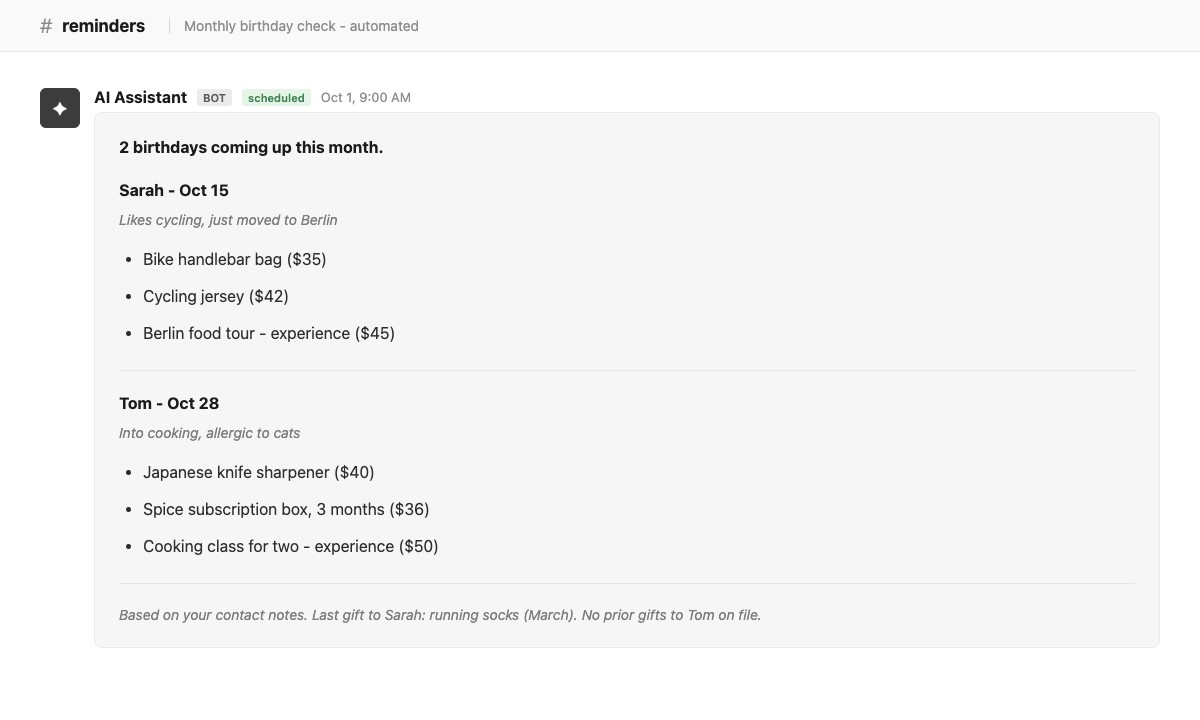
I keep birthdays in my calendar. The problem was never remembering the date. The problem was remembering to actually prepare something. A calendar reminder the morning of is too late for a gift, and a week-early reminder just gets snoozed.
Now I have a monthly check that pulls upcoming birthdays for the next 30 days and asks AI: given what I know about this person (a few notes I keep in a text file - likes cycling, just moved to Berlin, allergic to cats), suggest three gift ideas under $50 and one experience idea. It runs on the 1st of every month. By the time the birthday arrives, I've already ordered something.
This is the kind of task that sounds trivial until you realize you've been winging it for years and everyone notices.
The one that runs without me

All the examples above still need me to trigger something. Open a shortcut, run a script, type a question. The one AI use case that runs completely on its own is the smallest one.
I built a Mac app called Stir that shows a greeting overlay the instant my laptop wakes from sleep. Open the lid, and before I even see the desktop, there's a line of text - sometimes warm, sometimes funny, always different. AI generates it based on the time of day and whatever tone I've set. No chat window, no prompt, no interaction at all. It just shows up and fades away.
It sounds like a gimmick until you've had it for a few weeks. Going back to a blank wake feels like something's missing. The first thing your computer says to you probably shouldn't be a password field.
The pattern
None of these are impressive on their own. A weather summary. Three stretches. Gift ideas. A greeting. Each one took maybe 20 minutes to set up.
But that's the point. The interesting use of AI isn't building agents or automating workflows or replacing your IDE. It's the stuff that's too small for a dedicated app, too personal for a generic service, and too simple to justify a subscription. AI that knows your context can handle all of it, quietly, without you opening a chat window.
The best AI features are the ones you forget are AI.
Stir is the wake-up greeting part of this setup. It's free to try on the Mac App Store.